
Lipoprotein Insulin Resistance (LP-IR) Score
The LP-IR score is a composite biomarker derived from nuclear magnetic resonance (NMR) spectroscopy that measures insulin resistance through lipoprotein particle patterns — not through insulin concentration directly. Where fasting insulin reflects how much insulin your pancreas is producing, LP-IR reflects what that insulin environment is doing to your lipoprotein particles over time.
The result is a more stable, reproducible signal of insulin resistance that predicts cardiometabolic risk years before fasting glucose or A1c become abnormal.
What Is the LP-IR Score?
LP-IR stands for Lipoprotein Insulin Resistance. It is a weighted composite score calculated from six lipoprotein variables measured by the NMR LipoProfile® test (LabCorp). Each variable reflects a known consequence of insulin resistance on lipoprotein particle size and concentration.
The score ranges from 0 to 100:
0 = maximum insulin sensitivity
100 = maximum insulin resistance
LP-IR does not measure insulin directly. Instead, it captures the downstream metabolic signature that chronic insulin resistance creates in the lipoprotein particle profile pattern that proves more stable across time than a single fasting insulin measurement.
How Is LP-IR Calculated?
LP-IR is derived from six NMR-measured lipoprotein parameters. Each was selected and weighted based on its correlation with insulin resistance as measured by the hyperinsulinemic-euglycemic clamp which is the research gold standard for directly quantifying insulin sensitivity.
| Lipoprotein Parameter | Weight in Score |
|---|---|
| Mean VLDL particle size | 32% |
| Large VLDL particle concentration | 22% |
| Mean HDL particle size | 20% |
| Large HDL particle concentration | 12% |
| Small LDL particle concentration | 8% |
| Mean LDL particle size | 6% |
In insulin-resistant individuals, VLDL particles tend to be larger and more numerous, HDL particles tend to be smaller and fewer, and LDL particles tend to shift toward the smaller, denser end of the distribution. LP-IR quantifies how much a person's lipoprotein profile matches this pattern.
Source: Shalaurova I, et al. Lipoprotein Insulin Resistance Index: A Lipoprotein Particle–Derived Measure of Insulin Resistance. Metab Syndr Relat Disord. 2014;12(8):455–461.
LP-IR Score Range and What It Means
As with most continuous biomarkers, LP-IR should be interpreted in the context of the full clinical picture, including other metabolic markers, cardiovascular risk factors, and patient history, rather than as a binary diagnosis.
| Interpretation | Female | Male |
|---|---|---|
| Optimal | < 30 | < 40 |
| Near Optimal | 31–40 | 41–50 |
| Intermediate | 41–50 | 51–60 |
| High | 51–60 | 61–70 |
| Very High | 61+ | 71+ |
If you were to compare a Cardiometabolic Risk Assessment or an Advanced Metabolic Health Assessment for a female and male side-by-side, you would see how these differences are reflected in the Insulin Resistance charts throughout the report.

What Does an Elevated LP-IR Mean?
An elevated LP-IR score reflects a lipoprotein particle pattern consistent with insulin resistance: more large VLDL particles, fewer and smaller HDL particles, and a shift toward smaller, denser LDL particles. This pattern reflects both impaired lipid clearance and altered lipoprotein metabolism driven by chronic hyperinsulinemia.
Conditions associated with elevated LP-IR include:
Metabolic syndrome
Prediabetes and type 2 diabetes
Atherosclerotic cardiovascular disease (ASCVD)
Nonalcoholic fatty liver disease (NAFLD/MASLD)
Polycystic ovary syndrome (PCOS)
Hypertension
One clinically important characteristic of LP-IR: it can be elevated during the compensatory hyperinsulinemia phase, when the pancreas is still producing enough insulin to keep fasting glucose in the normal range. This means LP-IR may detect insulin resistance years before fasting glucose, A1c, or HOMA-IR cross diagnostic thresholds.
LP-IR and Cardiovascular Risk
Insulin resistance is an independent driver of cardiovascular risk separate from its role in diabetes development. An elevated LP-IR is associated with:
Higher concentrations of atherogenic lipoprotein particles (LDL-P, ApoB)
A shift toward smaller, denser LDL particles that penetrate arterial walls more readily
Elevated triglycerides and reduced HDL particle count
Increased systemic inflammation
Accelerated atherosclerosis
This relationship has particular relevance when interpreted alongside a coronary artery calcium (CAC) score. A CAC score of zero is generally reassuring (but not a “free pass” becaues it does not measure soft plaque), but elevated LP-IR alongside a zero CAC score suggests active atherogenic burden that imaging cannot yet detect. The two measures are complementary: CAC shows what has already calcified; LP-IR reflects the metabolic environment driving ongoing plaque development.
In the MESA cohort, LP-IR was associated with subclinical atherosclerosis and incident cardiovascular events independent of traditional lipid measures.
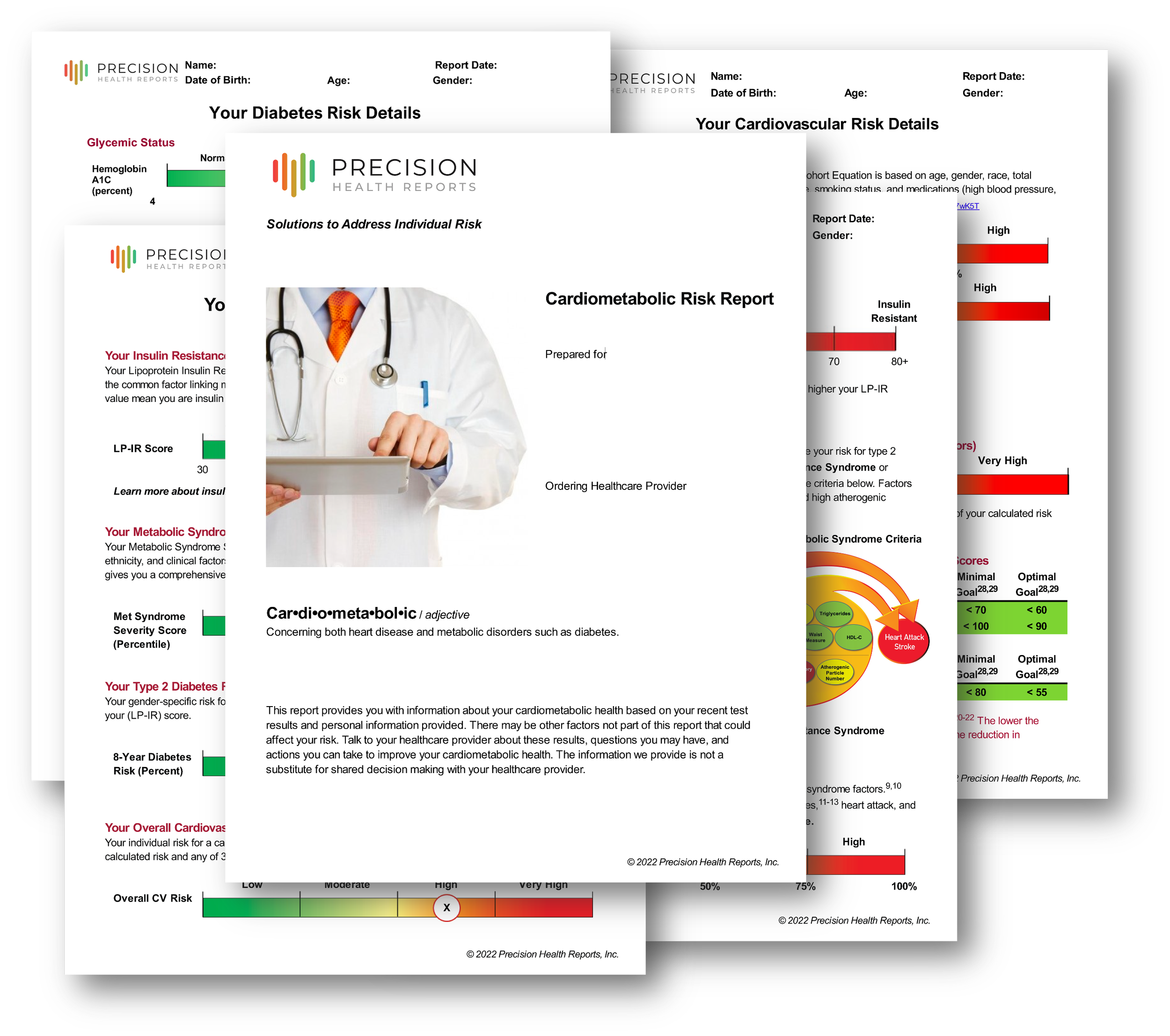
LP-IR is one of several interconnected biomarkers in a full cardiometabolic risk picture. The Cardiometabolic Risk Assessment is built to to give a clinical-quality integration of LP-IR and other advanced biomarkers into an overall cardiometabolic risk picture.
LP-IR and Diabetes Risk
LP-IR has demonstrated robust predictive value for incident type 2 diabetes across multiple large, prospective cohort studies:
MESA (Multi-Ethnic Study of Atherosclerosis)
WHS (Women's Health Study): LP-IR predicted incident diabetes over 20 years of follow-up, outperforming traditional lipid measures
PREVEND (Prevention of REnal and Vascular ENd-stage Disease)
JUPITER trial lipoprotein substudy
In the Women's Health Study, LP-IR was among the strongest predictors of type 2 diabetes onset over a 20-year horizon. The predictive value held even after adjustment for fasting glucose and established diabetes risk factors, suggesting that LP-IR captures a dimension of metabolic risk that standard markers miss.
Source: Akinkuolie AO, et al. Lipoprotein Insulin Resistance Score and Risk of Incident Diabetes During Extended Follow-Up of 20 Years: The Women's Health Study. Diabetes Care. 2017;40(10):1350–1357.
LP-IR vs. HOMA-IR
Both LP-IR and HOMA-IR are measures of insulin resistance, but they assess it from different angles and have meaningfully different practical characteristics.
| LP-IR | HOMA-IR | |
|---|---|---|
| What it measures | Lipoprotein particle pattern | Fasting glucose × fasting insulin |
| Fasting required? | Yes | Yes |
| Day-to-day variability | Low | Higher |
| Detects early compensatory IR? | Yes | Less reliably |
| Cardiovascular risk signal | Direct | Indirect |
| Test availability | NMR LipoProfile (LabCorp) | Standard lab panel |
The two tests are complementary. HOMA-IR captures the direct glucose-insulin relationship and is widely available; LP-IR captures the lipoprotein metabolic signature that develops over time and connects insulin resistance more directly to cardiovascular risk.
→ See also: HOMA-IR: What It Is, Formula, Normal Range, and Meaning
LP-IR vs. Fasting Insulin
For a detailed comparison of LP-IR against fasting insulin, including the variability limitations of fasting insulin and the evidence supporting LP-IR's predictive stability, see our full breakdown in Why Use LP-IR vs. Other Methods of Testing Insulin.
Who Should Get an LP-IR Test?
LP-IR is most useful for:
Adults with metabolic risk factors: elevated triglycerides, low HDL, abdominal obesity, or hypertension
Individuals with a family history of type 2 diabetes or premature cardiovascular disease
People with normal fasting glucose or A1c but suspected early insulin resistance
Anyone with a CAC score greater than zero who wants to understand the metabolic environment driving further plaque development
Individuals interested in comprehensive cardiometabolic risk assessment rather than standard lipid panels alone
LP-IR is part of the NMR LipoProfile® test, which also reports LDL-P, HDL-P, VLDL-P, lipoprotein particle sizes, and small LDL-P.
How to Improve Your LP-IR Score
LP-IR responds to interventions that improve insulin sensitivity:
Lifestyle:
Resistance training and aerobic exercise both independently improve insulin sensitivity
Reduction in refined carbohydrates and ultra-processed foods
Weight reduction, particularly of visceral adiposity
Sleep optimization as poor sleep acutely elevates insulin resistance
Time-restricted eating and dietary patterns that reduce chronic insulin load
Pharmacological*:
GLP-1 receptor agonists
SGLT2 inhibitors
Metformin
*Not medical advice; speak with your healthcare provider before considering any pharacological interventions.
LP-IR's low day-to-day variability also makes it a reliable marker for tracking metabolic improvement over time in response to these interventions.
Frequently Asked Questions About LP-IR
-
A score below 45 is generally considered below the clinical threshold for insulin resistance on the 0–100 scale. Lower scores reflect greater insulin sensitivity. LP-IR should be interpreted alongside other metabolic markers and clinical context rather than as a standalone diagnostic threshold.
-
Yes. The LP-IR score is inaccurate if patient is non-fasting.
-
A score at or above 45 is consistent with insulin resistance. Elevated scores are associated with metabolic syndrome, prediabetes, type 2 diabetes risk, and increased cardiovascular risk, particularly through higher atherogenic lipoprotein particle burden.
-
Yes. LP-IR can detect the lipoprotein pattern of insulin resistance during the compensatory hyperinsulinemia phase when the pancreas is still producing sufficient insulin to keep fasting glucose in the normal range. Fasting glucose and A1c can appear normal for years while LP-IR is already elevated.
-
Fasting insulin measures insulin concentration at a single point in time and is subject to significant day-to-day variability. LP-IR measures the downstream pattern that insulin resistance creates in lipoprotein particles and is a more stable signal that reflects chronic metabolic state rather than a single-moment snapshot. See our full comparison: Why Use LP-IR vs. Other Methods of Testing Insulin.
-
-
No. LP-IR is derived from the NMR LipoProfile® test (LabCorp), which is an advanced panel measuring lipoprotein particle numbers and sizes using nuclear magnetic resonance spectroscopy. It is not included in standard cholesterol or lipid panels. See NMR Lipoprofile.
-
LP-IR is reported as part of the NMR LipoProfile® test, available through LabCorp (test code 884000). It is included as a component of the Precision Health Reports Cardiometabolic Risk Assessment.
REFERENCES
Shalaurova I, Connelly MA, Garvey WT, Otvos JD. Lipoprotein Insulin Resistance Index: A Lipoprotein Particle–Derived Measure of Insulin Resistance. Metab Syndr Relat Disord. 2014;12(8):455–461. PMC4175429
Akinkuolie AO, Meigs JB, Moorthy MV, Cook NR, Mora S. Lipoprotein Insulin Resistance Score and Risk of Incident Diabetes During Extended Follow-Up of 20 Years: The Women's Health Study. Diabetes Care.2017;40(10):1350–1357. PMC5644504
Grundy SM, et al. 2018 AHA/ACC Guideline on the Management of Blood Cholesterol. J Am Coll Cardiol.2019;73(24):e285–e350. PMID: 30423393
Detrano R, et al. Coronary Calcium as a Predictor of Coronary Events in Four Racial or Ethnic Groups (MESA). N Engl J Med. 2008;358:1336–1345. PMID: 18367736